
This article is general information, not medical advice. If pain is severe, lasting or getting worse, talk to a doctor. Read our health disclaimer.
Is working from the couch always bad? Not in the sense that a short couch session automatically causes injury. However, NIOSH advises avoiding a couch or soft chair for regular work. When there is no better option, it suggests back-support pillows and a more upright position. HSE separately treats occasional short display use differently from daily continuous use. Read NIOSH work-from-home guidance.
Is Working from the Couch Always Bad? The Duration Changes the Answer
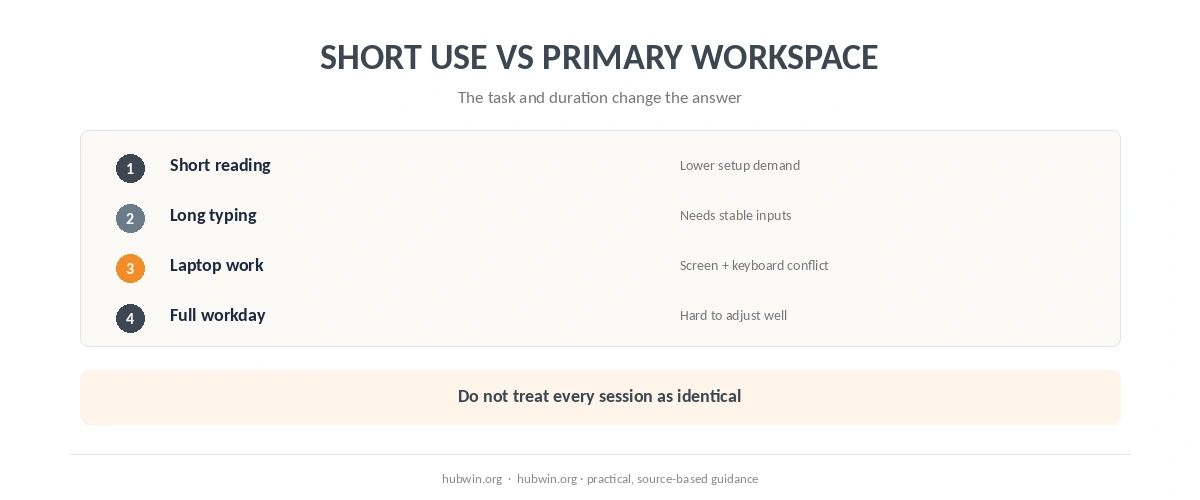
The answer to is working from the couch always bad depends on the task and duration. A short reading session differs from typing on a laptop for most of the day. HSE focuses its DSE assessment rules on daily screen users with continuous periods of an hour or more. Read HSE home-working guidance.
For prolonged work, a couch makes several adjustments harder. Back support is soft, the laptop often sits low, and the laptop joins the keyboard to the screen. A mouse may also lack a stable surface. The working-from-bed guide covers a similar tradeoff. The laptop ergonomics guide explains why separate screen and input positions help during longer sessions.
Is Working from the Couch Always Bad if You Add Support?
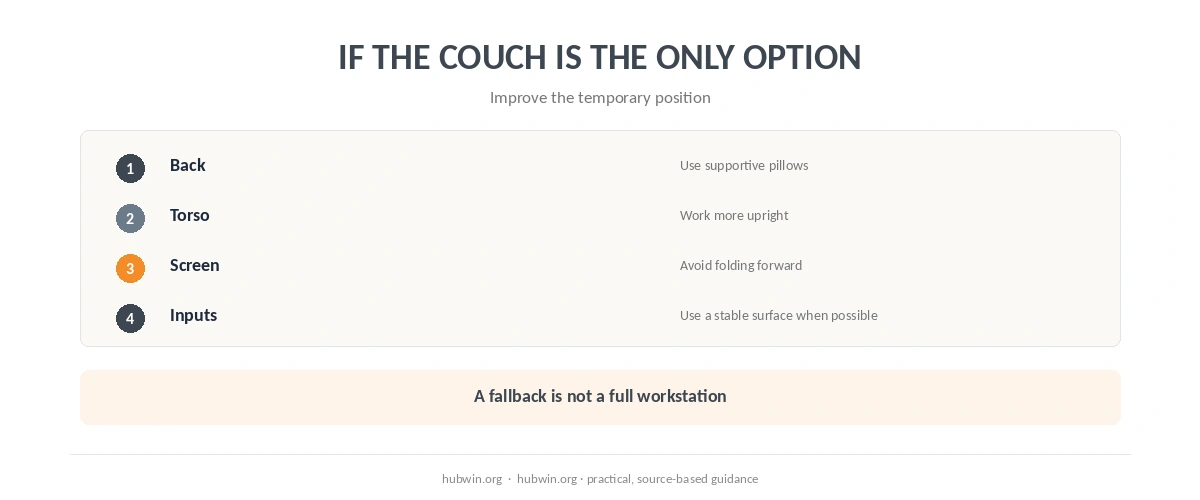
Support can improve a temporary setup, but it does not turn the couch into a fully adjustable workstation. If the couch is the only option, NIOSH suggests back-support pillows and a more upright position. That is a fallback, not a claim that the couch now fits every task.
If the screen is too low, raising only the laptop can make the keyboard too high. The laptop-stand myth guide covers the screen-and-keyboard tradeoff. Use the keyboard and mouse guide for input placement. For viewing height, see the monitor-height guide.
What Matters More Than the Label “Couch”
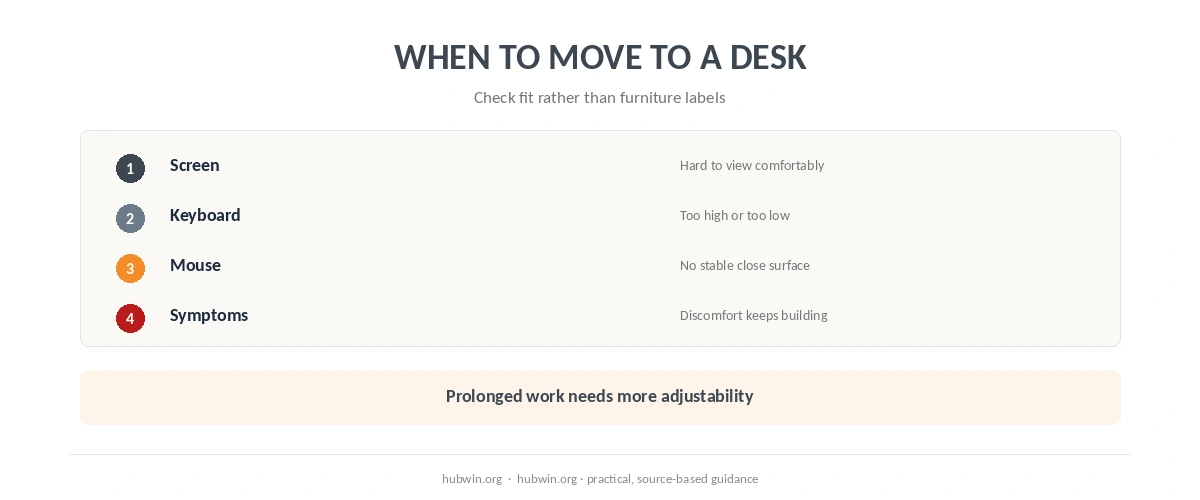
The furniture label is less useful than the fit. Check whether you can see the screen without folding forward. Keep the keyboard and mouse close, support the back and feet, and change position. The sitting posture guide and ergonomics checklist give the same checks for any workstation.
When people ask is working from the couch always bad, the more useful question is whether the setup fits the task for the time you need it.
If your couch setup fails several of those checks, move demanding computer work to a more stable surface. The non-ergonomic desk fixes and bad-chair guide show how to improve imperfect furniture without buying a full office.
Short Couch Sessions Still Need Breaks and Position Changes
Even a decent temporary position becomes less useful if you hold it for a long time. The microbreak guide and better-breaks guide emphasize changes of activity and position. They do not ask you to hold one pose all day.
If a couch session causes pain, numbness or tingling, do not assume the furniture explains everything. Persistent symptoms need a wider view. Change the setup and seek medical advice for severe, lasting or worsening symptoms.
How We Research
HubWin read NIOSH’s 2020 home-work guidance, current HSE DSE home-working guidance and OSHA’s computer-workstation principles. NIOSH advises avoiding couches and soft chairs for regular work. It also offers a supported upright fallback when there is no alternative. We therefore separate occasional use from a prolonged primary workstation. Learn how HubWin researches articles.
FAQ
Official guidance does not define a short couch session as automatically harmful. The concern grows when soft seating becomes the main prolonged computer setup.
NIOSH suggests pillows for back support when there is no better option. That does not solve every screen or input-position problem.
Either can fit poorly. Check support, screen position, keyboard and mouse reach, foot support and whether you can change position.
Not automatically. Raising the screen can make the built-in keyboard too high, so prolonged use may require separate input devices.
Move when the screen or input position stops working well. Also move when discomfort keeps building or the session becomes long and repetitive.
The Bottom Line
So, is working from the couch always bad? No. But official guidance makes it a weak default for prolonged computer work because soft seating is difficult to adjust. Use it briefly when appropriate; use a more stable workstation for sustained typing and screen work.