
How to Improve Circulation While Sitting at a Desk
Long periods of immobility can reduce leg movement and contribute to venous stasis. The practical answer is regular movement, not a promise that desk exercises prevent blood clots.
Long periods of immobility can reduce leg movement and contribute to venous stasis. The practical answer is regular movement, not a promise that desk exercises prevent blood clots.

Better indoor air starts with source control and clean-air ventilation. Filtration can help, but no purifier removes every pollutant or replaces fixing the source.

Pain is not a productivity target. Use early symptoms as a signal to reduce exposure, change the task or setup, and get medical help when symptoms persist or escalate.

Sitting can aggravate hip discomfort, but it does not identify the cause. Start with support, seat fit and movement, and take persistent or severe symptoms seriously.

Hand and wrist symptoms can overlap. Pattern clues may help you describe them, but a desk setup cannot diagnose carpal tunnel syndrome, tendinitis or strain.

The 20-20-20 rule is a simple screen-break reminder. Eye-care groups recommend it, while research suggests we should not treat the exact numbers as magic.
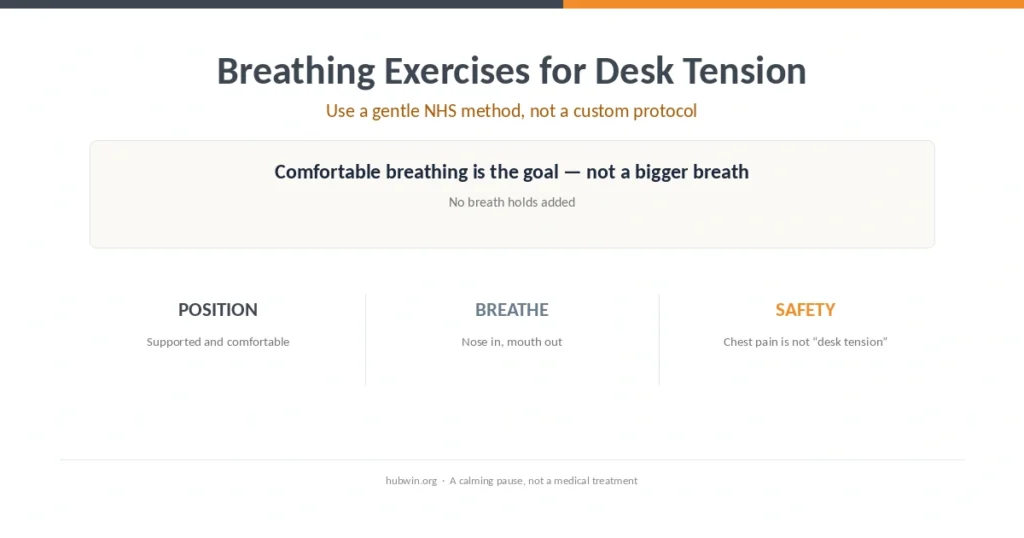
A simple NHS breathing technique can be used as a calming break at a desk. It is not a treatment for unexplained chest pain, breathlessness or persistent symptoms.

Leg pain after sitting has many possible causes. Review posture, pressure and movement without assuming the desk is the diagnosis, and know clot-related red flags.
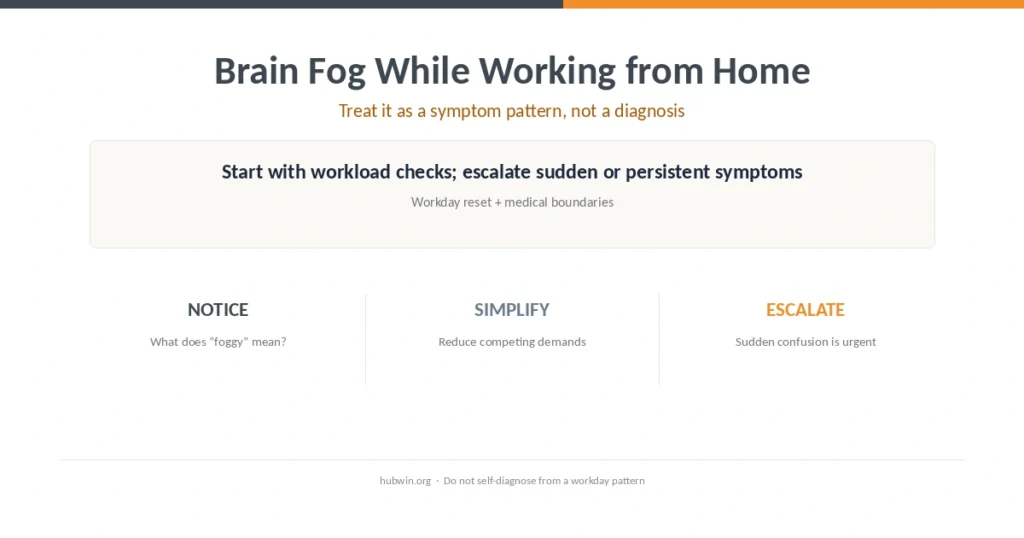
Brain fog is an informal description, not a diagnosis. Use workday changes as low-risk experiments while taking persistent or sudden cognitive symptoms seriously.

Hand numbness may relate to nerve compression, repetitive tasks, or many non-work causes. Ergonomic changes can reduce exposure but cannot identify the cause.