
This article is general information, not medical advice. If pain is severe, lasting or getting worse, talk to a doctor. Read our health disclaimer.
Why your legs hurt after sitting at a desk cannot be answered from posture alone. Leg pain can come from muscles, joints, nerves, blood vessels, injuries and medical conditions. Mayo Clinic specifically advises evaluation for new persistent leg pain and notes that prolonged sitting can be associated with venous problems in some people.
For mild discomfort that clearly builds during desk time, review simple exposures first: seat height, foot support, pressure at the seat edge and how long you stay still. Comfortable sitting posture, chair adjustment and office ergonomics guidelines can help with those checks. They cannot diagnose the cause of leg pain.
Because there is no single answer to why your legs hurt after sitting at a desk, separate obvious chair pressure and long static periods from symptoms that need medical assessment.
Why Your Legs Hurt After Sitting at a Desk: Check Pressure and Support
A chair that is too high can leave the feet unsupported. A seat that presses behind the knees can also be uncomfortable. OSHA chair guidance emphasizes supported feet and enough clearance near the back of the knees. Adjust the chair and desk as a system rather than forcing one “perfect” sitting angle.
If lowering the chair makes the desk too high, use the broader setup logic in desk-height guidance, simple ergonomic changes and fixes for a non-ergonomic desk. The goal is to reduce obvious pressure and unsupported positions, not to treat unexplained pain.

Movement Matters More Than Holding One Position All Day
OSHA recommends breaking up long periods of static computer work with short pauses, standing, stretching or walking. That advice is about reducing prolonged exposure. It does not mean that every leg symptom after sitting is harmless or that movement alone is a treatment.
When thinking about why your legs hurt after sitting at a desk, movement is one exposure to review, not proof of the underlying cause.
Use microbreaks, better breaks and ways to reduce stiffness from sitting to create more position changes. If pain is one-sided, persistent, swollen or otherwise unusual, move from workstation troubleshooting to medical assessment.
Notice the Difference Between General Aching and Concerning Symptoms
Mayo Clinic notes that leg pain has many possible causes. DVT is one important but not automatic explanation. NHS and Mayo guidance describe DVT symptoms such as pain with one-sided swelling, warmth or skin-color change. A blood clot can also occur without obvious symptoms, so a desk-based checklist cannot rule it out.
Do not massage, stretch aggressively or “walk it off” because you assume the symptom is muscular. If the pattern fits a possible blood clot or another urgent problem, seek medical help. Workstation changes can wait.
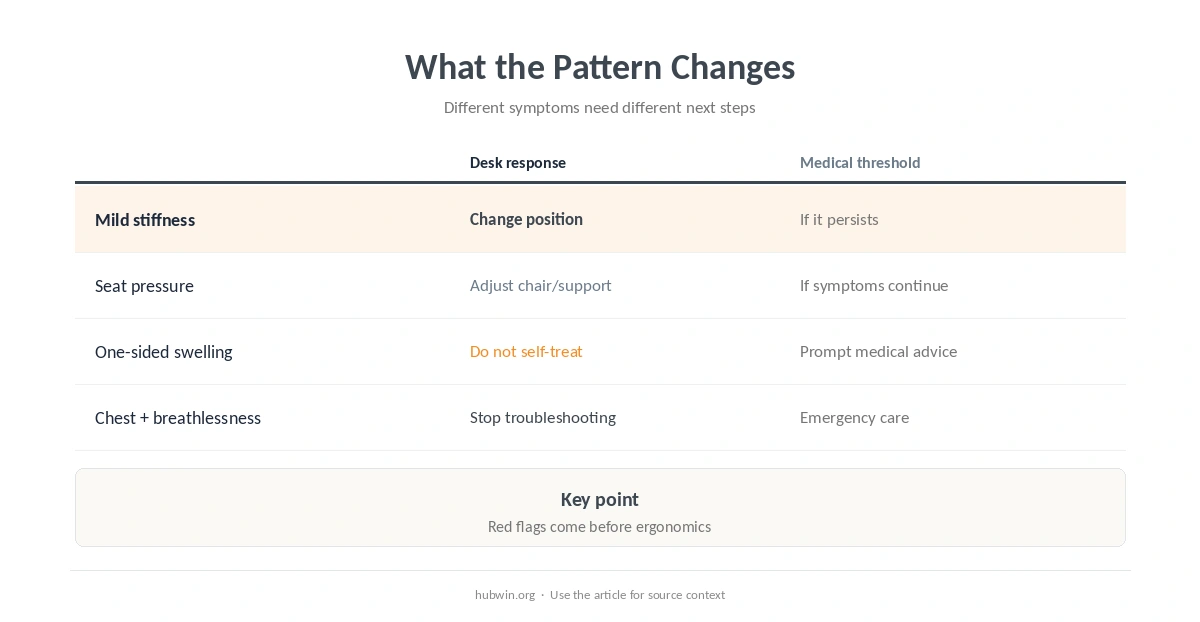
| What you notice | Low-risk response | Medical threshold |
|---|---|---|
| Mild stiffness after a long static block | Change position and walk briefly | Seek care if it persists or worsens |
| Pressure behind knees or unsupported feet | Adjust chair or add appropriate foot support | Reassess if symptoms continue |
| One-sided pain with swelling or warmth | Do not treat as a desk-fit issue | Get prompt medical advice |
| Leg symptoms plus chest pain or sudden breathlessness | Stop troubleshooting | Seek emergency care |
Avoid Turning Every Ache Into a Circulation Claim
It is common online to describe any leg discomfort after sitting as “bad circulation.” That phrase is too vague to diagnose the problem. Some people may have venous issues, while others have musculoskeletal, nerve or other causes. New or persistent pain deserves a real clinical history rather than a generic circulation label.
That is why a careful answer to why your legs hurt after sitting at a desk avoids a one-size-fits-all “circulation” explanation.
For ordinary workstation review, compare your symptoms with signs your setup may be contributing to pain, the daily body check-in and the home-office health checklist. These pages help you observe patterns without promising a diagnosis.
When to See a Doctor
Mayo Clinic advises medical evaluation for new persistent leg pain. Seek prompt care for pain with swelling, redness or warmth in the lower leg, for a leg that becomes pale or unusually cool, or for serious symptoms that begin without a clear reason.
NHS guidance treats suspected DVT as urgent. Emergency symptoms can include sudden shortness of breath, chest pain, fainting, rapid breathing or coughing up blood. If those occur with possible clot symptoms, seek emergency care immediately.
If there are no red flags but symptoms keep returning, record when they happen and what position you were in. When a setup stops working and long-hours setup guidance can help you review the work environment while you arrange appropriate medical advice.

How We Research Why Your Legs Hurt After Sitting at a Desk
HubWin uses medical sources for causes and red flags, and ergonomics sources only for workstation exposure such as unsupported feet, seat pressure and long static periods. We do not infer that the desk caused a symptom just because the symptom appeared during work.
Sources reviewed October 9, 2026: Mayo Clinic leg pain guidance, Mayo Clinic DVT guidance, NHS DVT guidance, and OSHA chair ergonomics. Read how HubWin researches articles.
No. Leg pain has many possible causes, including musculoskeletal, nerve, vascular and other medical causes. “Poor circulation” is too broad to use as a diagnosis.
Yes, obvious fit problems such as unsupported feet or pressure near the back of the knees can contribute to discomfort. Fixing those exposures does not rule out other causes.
Do not aggressively stretch an unexplained painful or swollen leg. Gentle movement may help ordinary stiffness, but persistent or concerning symptoms need medical assessment.
NHS and Mayo list one-sided leg pain or swelling, warmth and skin-color change among possible signs. Suspected DVT needs prompt medical advice.
Possible clot symptoms combined with sudden shortness of breath, chest pain, fainting, rapid breathing or coughing up blood require emergency care.