

How to Recover Confidence After Unproductive Days
One low-output day does not need a dramatic comeback plan. A useful reset is specific: describe what happened, keep the lesson, and make the next action smaller.
One low-output day does not need a dramatic comeback plan. A useful reset is specific: describe what happened, keep the lesson, and make the next action smaller.

Pomodoro is more than a 25-minute timer. The original method also uses planning, interruption handling, recording, and review.

Starting with messages can hand the first decisions of the day to other people. A small communication boundary can protect a more intentional start.

A task system should make work visible without becoming another job. One capture point, one active view, and a short review are usually enough.

An easier Monday starts before Monday: leave a clear handoff, protect weekend recovery, and make the first work block simple to enter.

Task batching can reduce unnecessary switching when similar work can share the same tools and mental context, but rigid batches can create their own delays.
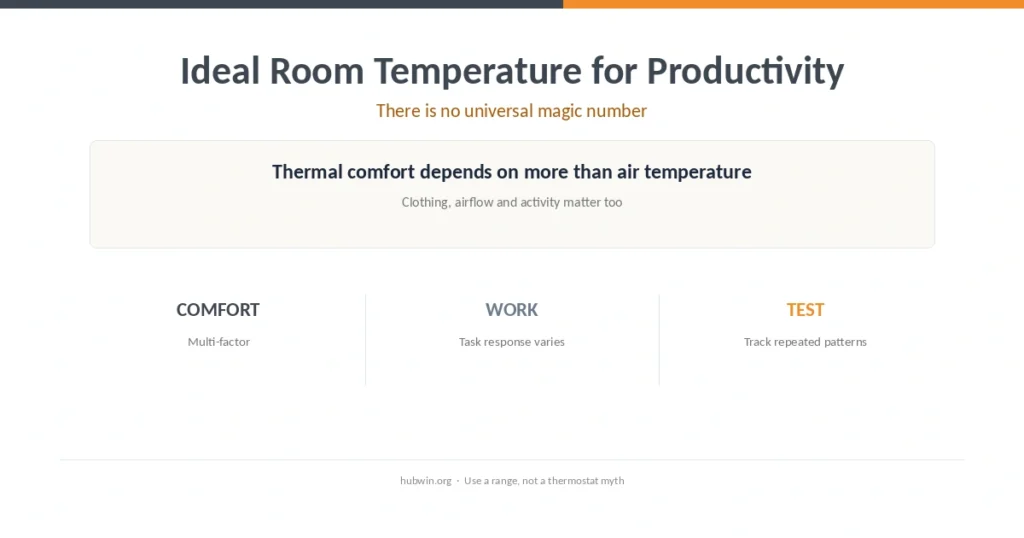
Research suggests temperature can affect performance, but comfort depends on more than the thermostat and study results do not point to one universal setting.

A fallback planning framework for disrupted workdays: protect real commitments, choose one meaningful progress target, communicate changes, and stop rebuilding the full plan.
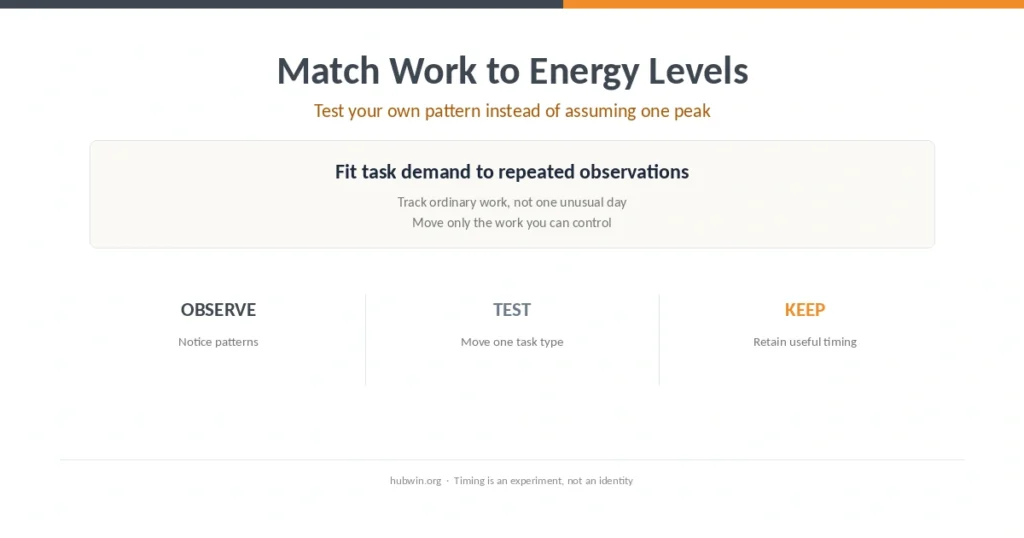
A cautious way to schedule work around your own alertness patterns without assuming everyone has the same daily energy curve.

A simple midday reset for remote work: pause, clear loose inputs, check what changed, choose the next priority, and restart from one defined action.