
This article is general information, not medical advice. If pain is severe, lasting or getting worse, talk to a doctor. Read our health disclaimer.
Headaches from computer work can occur alongside digital eye strain, but a screen does not prove the cause of a headache. Mayo Clinic’s eyestrain guidance, current in 2026, lists headache among possible symptoms. It also names digital-device use, glare, dim light, dry eyes and uncorrected vision as factors that can contribute to eye strain. Headaches have many other possible causes. Read Mayo Clinic’s eyestrain guidance.
Headaches from Computer Work: Check Visual Strain Before Chasing Gadgets
The American Academy of Ophthalmology updated its digital-device guidance in 2025. It says prolonged device use can cause temporary discomfort that may include dry eyes, blurry vision, tearing and headache. AAO also says research has not shown that computer blue light damages the eyes. It does not identify blue light as the cause of digital eye discomfort. That makes expensive “blue-light protection” a poor first explanation for headaches from computer work. See the AAO guidance.
Start with ordinary screen comfort. OSHA’s monitor guidance uses a preferred viewing distance of 20–40 inches (50–100 cm). HSE uses about an arm’s length as a practical starting point. The exact number matters less than being able to read the screen without leaning forward or squinting. Our monitor-distance guide keeps the official ranges separate instead of inventing one perfect distance. The office ergonomics guidelines show how monitor position fits the rest of the workstation.
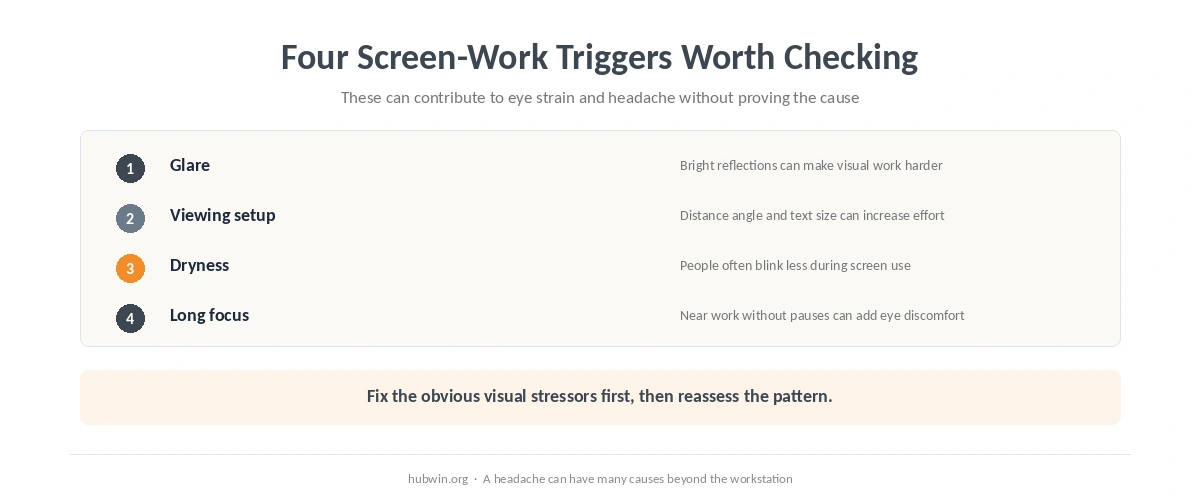
Reduce Headaches from Computer Work by Making the Screen Easier to Read
Mayo Clinic’s 2026 eyestrain guidance lists bright light or glare, dim light, dry eyes and uncorrected vision among factors that can contribute to eye strain. AAO recommends sitting about 25 inches (64 cm), roughly an arm’s length, from the screen. It also recommends placing the display so you look slightly downward and reducing glare and excessive brightness. These are comfort measures, not treatments for a headache disorder.
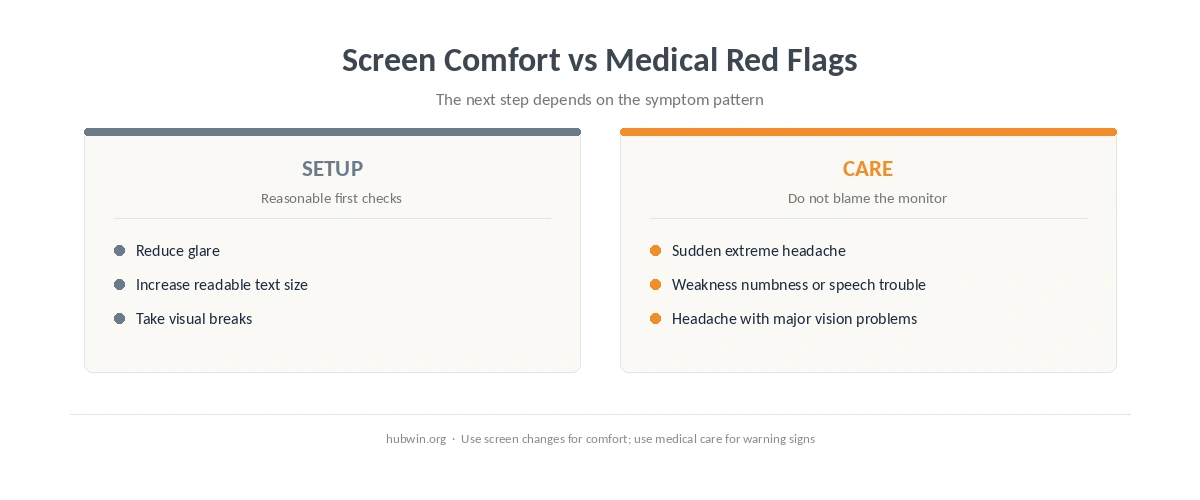
- Reduce reflections and direct glare. Reposition the display, use blinds or curtains, or change the light source before turning screen brightness to an extreme.
- Make text comfortably readable. Increase text size or contrast so you do not need to lean closer or squint.
- Look away from the screen regularly. AAO recommends giving the eyes a break by looking at something in the distance for a while.
- Notice dryness or blur. Persistent blurry vision, double vision or eye discomfort deserves an eye-care assessment rather than endless desk adjustments.
For room-level fixes, use the home-office lighting guide. The computer eye-strain guide covers dryness, blur and other screen symptoms in more detail.
If your monitor is too high or low, use the monitor-height guide. For a full setup check, the home-office ergonomics checklist keeps screen, input devices and posture in one place.
Break Up Long Near-Focus Sessions Without Treating a Timer as Medicine
HSE updated its display-screen guidance in 2025. It recommends short, frequent breaks or changes of activity rather than infrequent long breaks. Mayo Clinic also lists reading or close focusing without pauses as a factor in eye strain. For headaches from computer work, that supports breaking up long visual-focus periods. It does not prove that a specific timer schedule will prevent headaches.
Use the microbreak guide for practical ways to change activity. A daily posture checklist can also catch the forward lean that often appears when a screen is hard to read. If a headache keeps recurring, write down when it starts and how long you had been doing near work. Note blur, dryness, glare and whether the headache improves away from the screen. That record can help describe the pattern to a clinician.
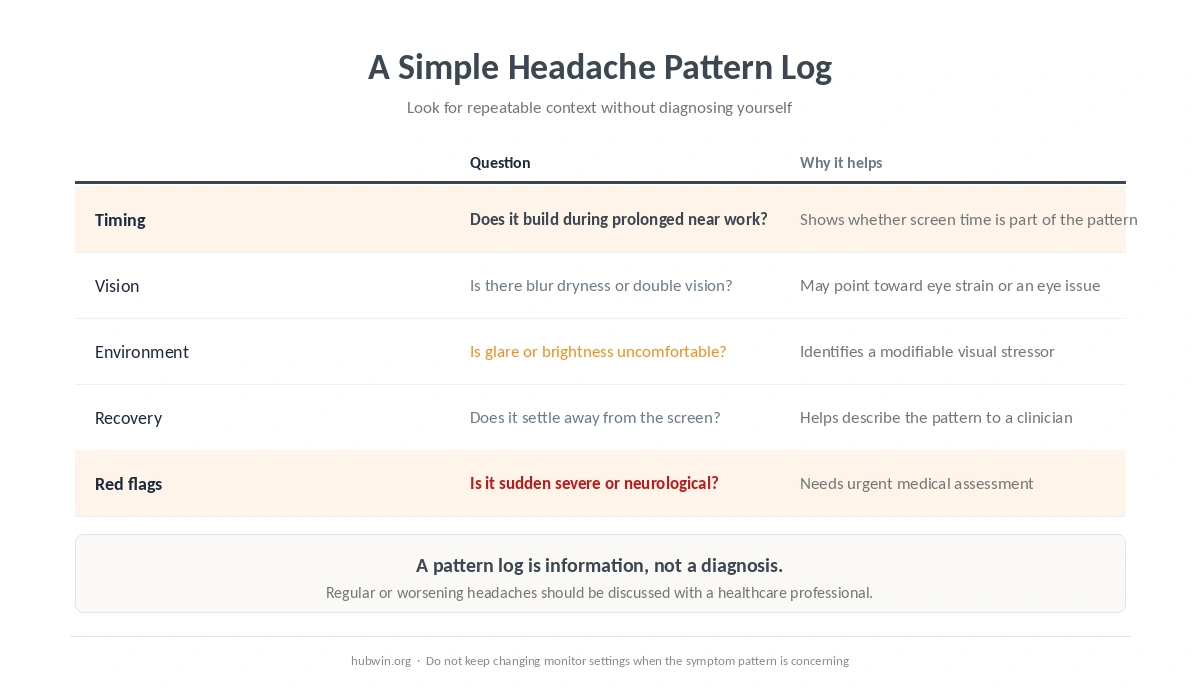
When to See a Doctor for Headaches from Computer Work
Do not automatically assign regular, worsening or unusual headaches to the monitor. NHS headache guidance current in 2026 advises medical help for headaches that keep recurring. It calls for urgent help when a headache comes with vision or eye problems, vomiting or other worrying symptoms. The NHS recommends emergency care when a headache starts suddenly and is extremely painful, follows a significant head injury, occurs with a seizure, or comes with numbness, weakness, speech difficulty, balance problems or memory problems. Read the NHS headache guidance.
Mayo Clinic’s 2026 headache overview also emphasizes that headaches have many possible causes, and some require emergency care. Mayo Clinic eyestrain guidance advises seeing an eye specialist when self-care does not relieve eye strain. A new vision problem, persistent double vision, sudden vision loss or a changing headache pattern deserves medical assessment rather than another monitor accessory. The desk-posture guide may reduce an obvious workstation stressor, but it cannot explain persistent headaches.
How We Research
HubWin reviewed Mayo Clinic eyestrain guidance current in 2026, Mayo Clinic headache information updated in July 2026, American Academy of Ophthalmology digital-device guidance updated in 2025, NHS headache guidance current in 2026, and HSE display-screen break guidance updated in 2025. We also checked the existing HubWin monitor-distance source table. HubWin reviewed these sources on October 8, 2026. Learn how HubWin researches articles.
FAQ
Screen use can contribute to eye strain, and headache is one possible symptom. A headache can also have many other causes, so do not automatically blame recurring symptoms on the screen.
AAO says blue light does not cause digital eye discomfort, and research has not shown that computer blue light damages the eyes. Start with screen comfort, glare and viewing habits instead.
OSHA gives a preferred range of 20–40 inches (50–100 cm), while HSE uses about an arm’s length. Use a distance that lets you read comfortably without leaning or squinting.
Looking away from the screen periodically is reasonable, but HubWin does not present one timer formula as a medical treatment for headaches.
A sudden extremely painful headache, or headache with seizure, weakness, numbness, speech or balance problems, can require emergency care. Follow local emergency guidance.
The Bottom Line
Headaches from computer work can occur with digital eye strain, glare, dryness or long near-focus sessions. The workstation is only one possible contributor. Make the screen easier to read, reduce glare, look away regularly and track the pattern. If headaches persist, worsen or come with neurological or major vision symptoms, get medical care.