This article is general information, not medical advice. If pain is severe, lasting or getting worse, talk to a doctor. Read our health disclaimer.
In practice, Breathing exercises to reduce desk tension can be a simple way to pause when work feels stressful, but they are not a treatment for unexplained pain or breathing problems. The NHS publishes a calming breathing technique for stress that can be done sitting, standing or lying down. Therefore, the sequence below follows that source rather than inventing a desk-specific protocol.
In practice, use breathing as one small part of a broader reset. If your workday is overloaded, pair it with a real break, a calmer environment or fewer interruptions. However, a breathing exercise cannot fix an unrealistic workload or diagnose why your chest, neck or shoulders feel tense.
Breathing Exercises to Reduce Desk Tension: Use the NHS Method
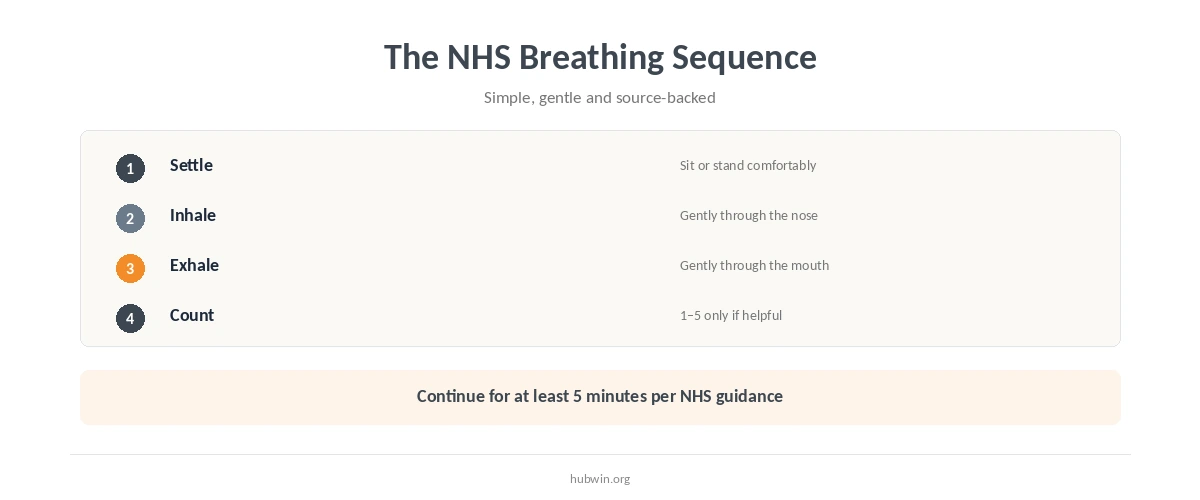
The NHS stress-breathing guide starts with a comfortable position. You can sit in a chair that supports your back, stand, or lie down. If you are sitting or standing, place both feet flat on the ground. Let the breath move as deep into the belly as is comfortable without forcing it.
These breathing exercises to reduce desk tension use the same gentle sequence whether you are at a desk or taking the pause elsewhere.
Then, the NHS then suggests breathing in through the nose and out through the mouth. Breathe gently and regularly. If counting is helpful, count steadily from 1 to 5 on the inhale and again on the exhale; the NHS notes that you may not reach 5 at first. Its published routine says to continue for at least 5 minutes.
Do Not Force a Deep Breath
“Deep” does not mean taking the biggest breath you can. The NHS wording is to let the breath flow as deep into the belly as is comfortable, without forcing it. Keep the shoulders easy and let the pace stay gentle. If counting makes the exercise feel pressured, the count is optional.
You can use the exercise before returning to work rather than continuing to type through it. Microbreaks, movement between calls and a quick desk reset address different parts of a break. There is no need to stack all of them every time.
Use Breathing as a Pause, Not a Productivity Test
Importantly, a calming exercise does not need to make you instantly productive to be worthwhile. Its purpose is to create a deliberate pause and a gentler breathing pattern. Avoid measuring success by whether you can immediately return to a difficult task at full speed.
Treat breathing exercises to reduce desk tension as a pause that may help you settle, not as a test of whether you can force yourself back to work.
Also, if stress is coming from blurred work-life boundaries, address the source as well. Separate work and life, use a clear end-of-day transition, or follow a shutdown ritual. Breathing should not become a way to tolerate an endlessly extending workday.
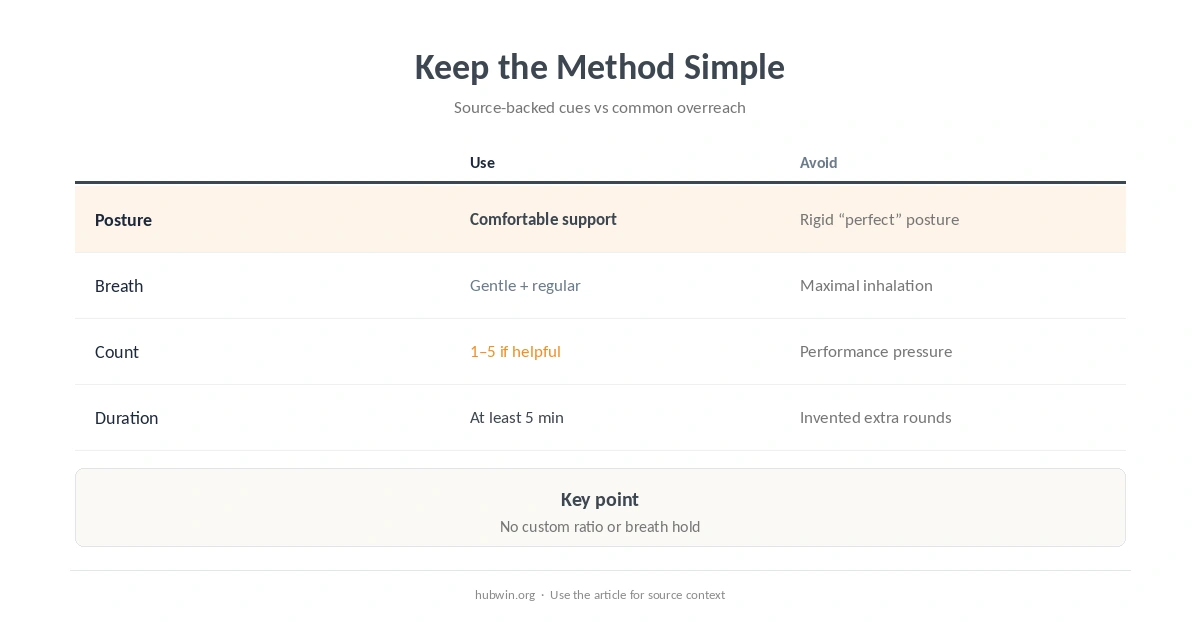
| Step | Source-backed cue | Avoid |
|---|---|---|
| Position | Sit supported or stand comfortably with feet grounded | Rigid posture |
| Inhale | Gently through the nose | Forcing a maximal breath |
| Exhale | Gently through the mouth | Pushing air out hard |
| Count | 1 to 5 if helpful | Treating the count as a performance target |
| Duration | NHS routine: at least 5 minutes | Inventing extra rounds or holds |
Where Desk Tension May Need a Different Response
However, if your shoulders are uncomfortable because the keyboard is too high, breathing will not change that exposure. If you have eye strain, a breathing exercise will not fix glare. Match the response to the problem rather than treating every symptom as stress.
Review office ergonomics guidelines, shoulder discomfort guidance, eye-strain guidance and setup-related symptom patterns when those issues are present. Keep medical symptoms separate from ordinary workstation adjustments.
When to See a Doctor
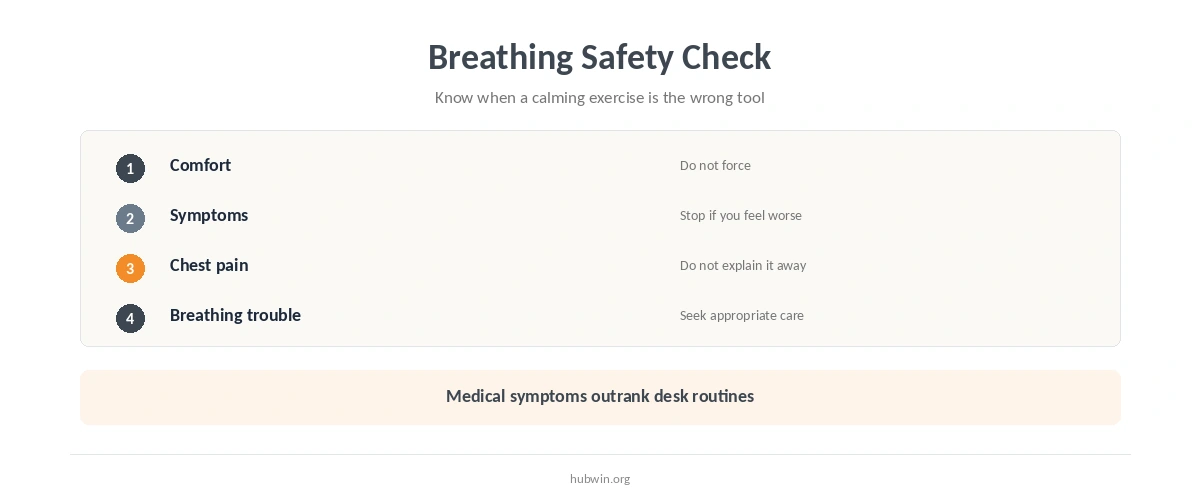
Do not use a calming breathing exercise to explain away new or severe breathing difficulty, fainting, or unexplained chest pain. Mayo Clinic advises emergency care for sudden severe or unexplained chest pain and for chest symptoms accompanied by trouble breathing, fainting or other serious signs.
If an exercise makes you feel unwell, stop. Persistent anxiety, recurrent panic symptoms, ongoing pain or breathing symptoms that interfere with daily life also deserve professional advice rather than repeated self-treatment at the desk.
For general tracking, the home-office health checklist and daily body check-in can help you notice patterns.
For workload stress, burnout prevention addresses the broader work design instead of asking a breathing exercise to do too much.
How We Research Breathing Exercises to Reduce Desk Tension
The breathing sequence in this article comes from NHS guidance. HubWin has not added breath holds, a custom inhale-to-exhale ratio or an invented frequency. The workplace framing and internal links are editorial context, not an NHS desk-work protocol.
Used this way, breathing exercises to reduce desk tension stay a simple calming tool rather than becoming an invented medical or productivity protocol.
Sources reviewed October 9, 2026: NHS breathing exercises for stress, NHS work-related stress guidance, and Mayo Clinic chest-pain first aid. Read how HubWin researches articles.
The NHS method used here is gentle breathing in through the nose and out through the mouth, with optional counting from 1 to 5 and a comfortable supported position.
The NHS page says to continue the exercise for at least 5 minutes. HubWin does not add extra rounds or breath holds.
No. The NHS says to let the breath move as deep into the belly as is comfortable without forcing it.
They may provide a calming pause, but they do not correct workstation exposures or diagnose pain. Adjust the setup when the setup is the issue.
New severe breathlessness, fainting or unexplained chest pain needs medical attention rather than a calming exercise.