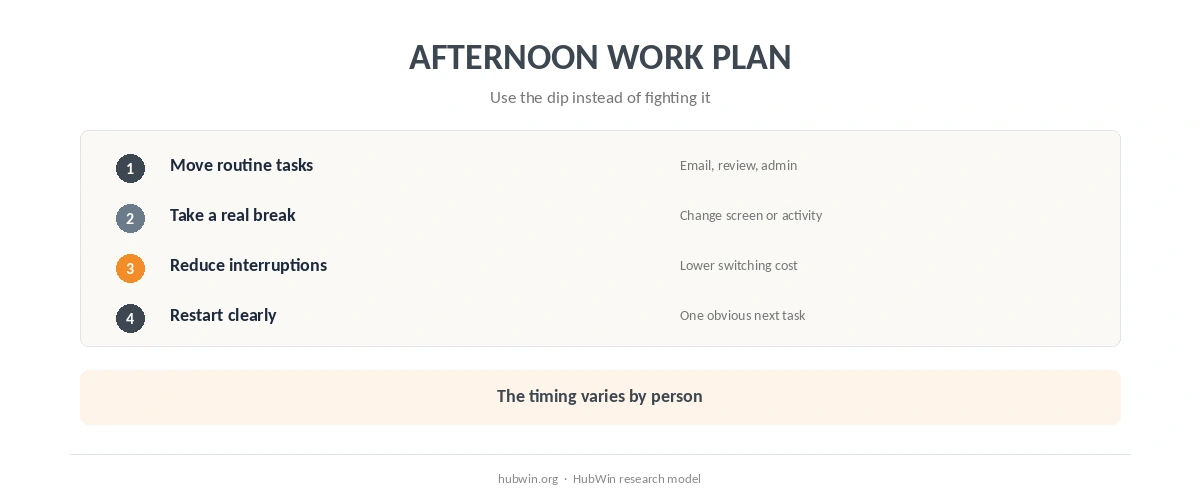
Afternoon slumps are not just a failure of discipline. A 2023 systematic review of time-of-day effects found more sleepiness and fatigue in the midafternoon. Some attention measures also dipped, although the size and timing varied by person and task. The useful response is to plan around a recurring low-energy window. Do not demand the same kind of work every hour. Read the systematic review.
Afternoon Slumps: Change the Task Before You Add a Hack
If concentration drops at roughly the same part of the day, reserve that window for lower-intensity work. Routine replies, administrative cleanup, review or a short planning pass can fit there. Keep demanding work for the times when you reliably concentrate better. The deep-work guide explains how to protect higher-focus blocks, while the home-office focus guide covers interruptions and task switching.
Do not turn the schedule into a rigid biological claim. Circadian timing, sleep, workload, meals and individual chronotype all matter. The review literature describes a general pattern, not a fixed clock time for every worker. A work-from-home productivity checklist can help you notice your own pattern without pretending that everyone should work the same hours.
Afternoon Slumps Improve When the Break Is Actually Different
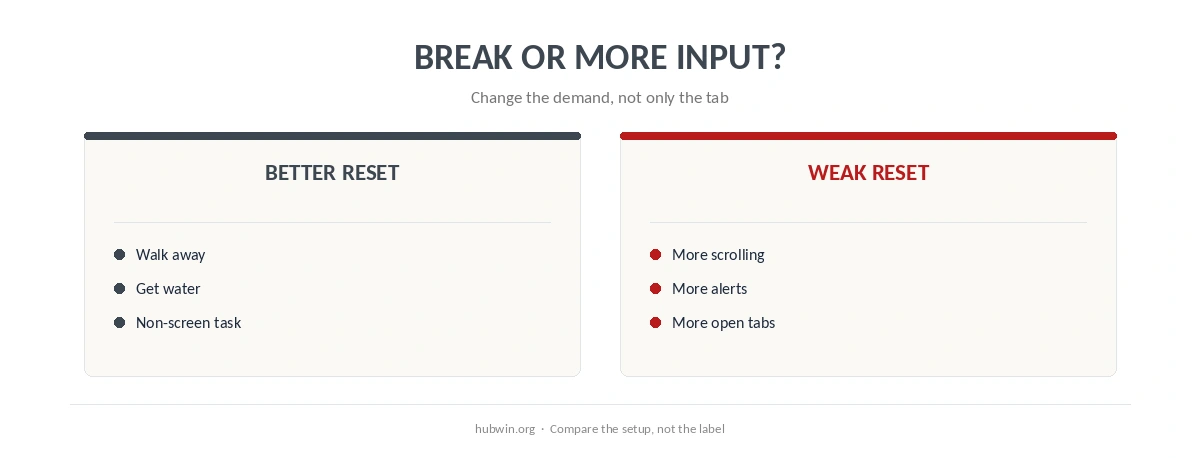
A break from focused work should change what you are doing. HSE says breaks from display-screen work can include changes of activity. NIOSH also recommends frequent breaks while working from home. The better-breaks guide explains why another browser tab is not much of a break. The desk-exercise guide offers source-based movement options for short gaps between calls.
A short walk or getting water can create a clearer reset than scrolling. Standing away from the screen or doing a different non-screen task can do the same. The point is not that a specific break length guarantees focus. It is to stop stacking the same visual and cognitive demand through the whole afternoon. If that is the part of the workflow you want to simplify, see work routine.
Reduce the Friction That Makes a Dip Worse
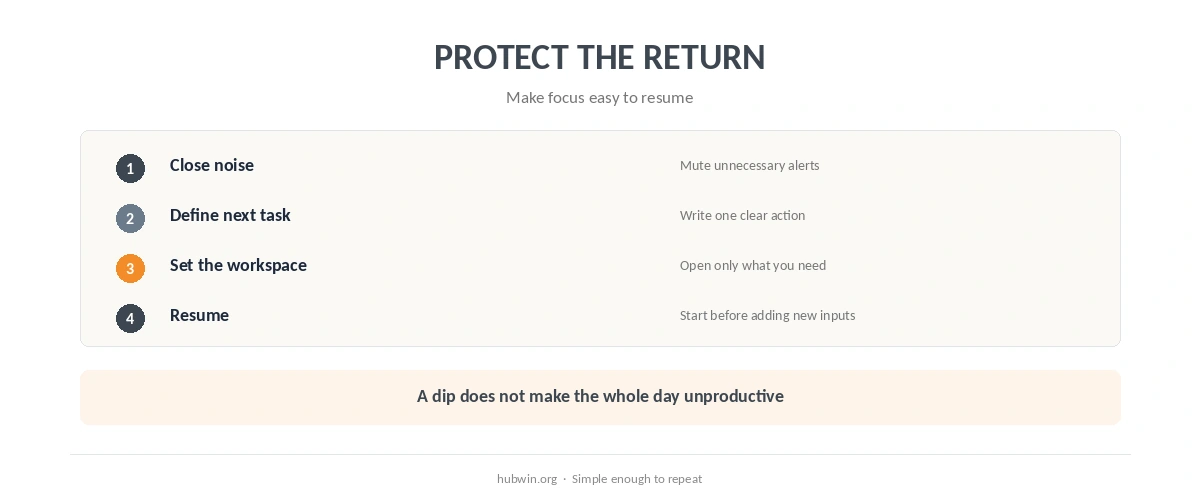
When alertness is lower, unnecessary interruptions become more expensive. Put notifications on a schedule, close unrelated tabs and make the next task obvious before the slump arrives. The distraction-free office guide covers the environment. The noise-reduction guide and noisy-home focus guide help when sound is the recurring trigger.
Routine also matters. NIOSH recommends keeping a routine, creating focus times, taking breaks and detaching at the end of the day. The remote-work morning routine can establish the start of the day. An end-of-day checklist keeps unfinished tasks from leaking indefinitely into the evening. Meanwhile, the work-life boundaries guide helps when the same room is used after work.
Do Not Treat Normal Variation as a Productivity Emergency
Not every slower hour needs a countermeasure. If the day still gets the important work done, a lower-intensity period can simply be part of the schedule. Trying to turn every afternoon into a peak-performance block can create more friction than it removes. When afternoon slumps are predictable, planning around them can be more useful than fighting them.
If afternoon slumps are severe, new or tied to broader symptoms, a productivity article cannot explain the cause. This page is about work planning, not diagnosis. For ordinary variation, the practical move is simpler: match the task to the energy you actually have, then protect the return to focused work. A related productivity guide covers matching work to energy levels.
How We Research
HubWin read the 2023 systematic review “Diurnal variation in variables related to cognitive performance” on October 8, 2026. We also read earlier reviews of circadian attention, HSE’s current DSE work-routine guidance and NIOSH’s working-from-home guidance. The research supports a general midafternoon dip in some measures. It does not identify one universal schedule or one single intervention. Read the NIOSH home-working guidance and see the HubWin research method.
FAQ
Yes, time-of-day research often finds increased sleepiness or lower attention in the midafternoon, but timing and size vary.
Not necessarily. Earlier research has found a post-lunch dip even when meal effects do not fully explain it.
Only if that is when you reliably focus well. Put demanding work in your stronger window instead of following a universal rule.
Use a break or task change that reduces the same screen and attention demand rather than simply switching to another distracting screen activity.
Not automatically. Normal daily variation is common; judge the workday by useful output and sustainability rather than constant intensity.
The Bottom Line
Plan for afternoon slumps instead of fighting them with random hacks. Move lower-demand work into the dip and take a real break. Then reduce interruptions and make the next focused task easy to restart.